
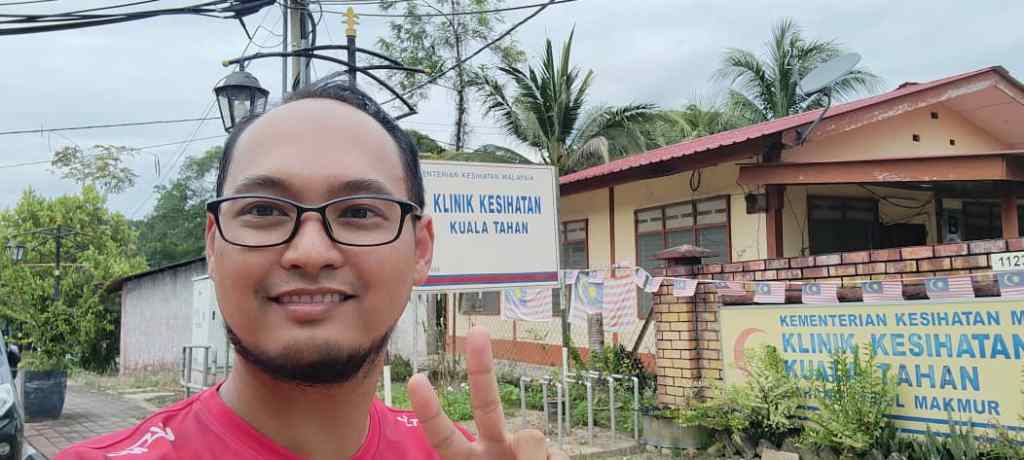
𝐈𝐬 𝐈𝐭 𝐄𝐚𝐬𝐲 𝐭𝐨 𝐁𝐞 𝐚 𝐃𝐨𝐜𝐭𝐨𝐫 𝐚𝐭 𝐚 𝐏𝐫𝐢𝐦𝐚𝐫𝐲 𝐂𝐚𝐫𝐞 𝐂𝐥𝐢𝐧𝐢𝐜 (𝐫𝐞𝐚𝐝: “𝐊𝐥𝐢𝐧𝐢𝐤 𝐊𝐞𝐬𝐢𝐡𝐚𝐭𝐚𝐧“/𝐊𝐊)?
- To answer this question, it’s not as easy as many people think, including young doctors fresh out of their housemanship (HO) in tertiary hospitals. Many new doctors coming into KK may just “go with the flow” at first. Eventually, they start saying, “Working in KK is easy; weekends off, no on-calls, more family time,” and so on. These are all common clichés. Please, do not have this mindset.
- I entered the field of primary healthcare, not as a fresh HO from a hospital. I had already worked in the Emergency Department at Kulai District Hospital for over a year. Before that, I was also a medical officer in the Emergency Department of a larger hospital as a “floating MO.” So, I never had the luxury of taking things lightly. There was no time to be “blurred” about new systems—I had to adapt quickly and keep moving forward.
- In my first week at the Kota Tinggi District Health Office, someone greeted me and we got to know each other. As usual, I introduced myself and shared my background. Then, they casually said, “So, what do you think about working in KK now? There are soooo many unnecessary responsibilities you have to take, right?” They smiled at me. I simply replied, “Oh~” but inside, I thought, “Responsibility is not something to be taken lightly.”
𝐖𝐡𝐲 𝐊𝐊?
- I didn’t join KK on a whim. I chose to be here. I knew what I was doing, and I was committed to making this my area of expertise. This is not something to be taken lightly.
- I used to work in emergency departments at both large and district hospitals. I saw firsthand how people misused emergency services. Patients with mild cases who should have gone to KK still ended up in emergency departments because they didn’t understand the system. I encountered young patients under 25 with diabetes, heart attacks, and strokes due to uncontrolled hypertension. I asked myself, “Why are these young people getting diseases that usually affect older adults?”
I also met elderly patients who were completely bedridden, refusing to move due to pain—because their gout had spiraled out of control! Many of them were retired government servants who had only been diagnosed with gout for a few years but had never been properly counseled on diet, weight management, or prevention. Why? Because no one had educated them! So many preventable conditions go undetected or unaddressed at the primary care level. Seeing this happen in hospitals made me choose KK.
- To summarize the key issues:
- 𝐏𝐫𝐢𝐦𝐚𝐫𝐲 𝐜𝐚𝐫𝐞 𝐦𝐚𝐧𝐚𝐠𝐞𝐦𝐞𝐧𝐭 𝐦𝐮𝐬𝐭 𝐛𝐞 𝐟𝐢𝐱𝐞𝐝! We must correct what is normal and normalize what is correct.
- 𝐓𝐡𝐞 𝐩𝐮𝐛𝐥𝐢𝐜 𝐧𝐞𝐞𝐝𝐬 𝐛𝐞𝐭𝐭𝐞𝐫 𝐡𝐞𝐚𝐥𝐭𝐡 𝐥𝐢𝐭𝐞𝐫𝐚𝐜𝐲, so they understand their own health and how the system works.
- That’s why I didn’t want to stay in a hospital—I chose KK.
𝐖𝐡𝐚𝐭 𝐌𝐮𝐬𝐭 𝐚 𝐊𝐊 𝐃𝐨𝐜𝐭𝐨𝐫 𝐇𝐚𝐯𝐞?
- 𝐍𝐨 𝐭𝐢𝐦𝐞 𝐭𝐨 𝐛𝐞 𝐥𝐨𝐬𝐭 𝐨𝐫 𝐝𝐢𝐬𝐨𝐫𝐢𝐞𝐧𝐭𝐞𝐝.In KK, you don’t get 1–2 days off for orientation. On my first day, I arrived late because I got lost searching for my KK. When I finally found it, I introduced myself, sat in my room, and immediately started seeing patients. How did it feel? Honestly, I just had to act like I knew what I was doing. Luckily, I had experience working closely with Dr. Loh and Dr. Kiran, both Endocrine specialists, in the Endocrine Clinic. I treated the clinic just like I would in a hospital.
- 𝐍𝐨 𝐡𝐚𝐧𝐝-𝐡𝐨𝐥𝐝𝐢𝐧𝐠. Corrections and feedback come in real-time to ensure the system runs correctly. I asked KK staff whenever I didn’t understand something. I had to learn everything by struggling through daily tasks—there was no structured orientation. Ironically, I was assigned responsibilities that had been “passed down” to me without a proper handover. The previous doctor had already left! So, is it tough to be a KK doctor? The challenges never stop.
- 𝐊𝐞𝐲 𝐪𝐮𝐚𝐥𝐢𝐭𝐢𝐞𝐬 𝐨𝐟 𝐚 𝐊𝐊 𝐝𝐨𝐜𝐭𝐨𝐫:
- 𝐋𝐞𝐚𝐝𝐞𝐫𝐬𝐡𝐢𝐩: KK doctors must have leadership skills. The system will keep running regardless, but if bad practices are allowed to continue, they will lead to poor decisions and worse outcomes. KK doctors manage entire populations, not just one or two patients at a time.
- 𝐓𝐡𝐞 𝐅𝐫𝐨𝐧𝐭 𝐋𝐢𝐧𝐞𝐫: We are the first line of defense in managing and treating patients. We must know which cases truly need to be referred to a hospital. In reality, less than 10% of our patients actually get referred to secondary/tertiary care . During my time in a district hospital, I saw that primary care doctors referred over 10% of cases—many of which could have been managed at KK with proper guidance. That’s why KK doctors must be skilled in assessing, managing, and reassuring patients.
- 𝐏𝐫𝐞𝐯𝐞𝐧𝐭𝐢𝐯𝐞 𝐌𝐞𝐝𝐢𝐜𝐢𝐧𝐞: A common mistake when transitioning to KK is treating it like a hospital—focused only on treatment while forgetting about prevention. Then, doctors start complaining, “This medication isn’t available here in the clinic,” or “That service isn’t here.” If you want everything to be readily available, stay in a hospital. Prevention is the key! It is our role to educate the public about their risk factors, help those who are already ill, and maintain the health of those who are not yet sick.
- 𝐆𝐞𝐧𝐞𝐫𝐚𝐥𝐢𝐬𝐭: Unlike specialists in hospitals, KK doctors must have a broad knowledge base. We handle everything—acute cases, chronic diseases, maternal and child health, mental health, vaccinations, and even health promotion.
𝐅𝐢𝐧𝐚𝐥 𝐓𝐡𝐨𝐮𝐠𝐡𝐭𝐬
Working in KK is not just an easy, routine job with better work-life balance. It requires strong leadership, quick adaptability, and a deep commitment to community health. For those who truly understand its importance, primary care is not just a job—it’s a calling.
𝗗𝗶𝘀𝗰𝗹𝗮𝗶𝗺𝗲𝗿: 𝗧𝗵𝗶𝘀 𝘄𝗿𝗶𝘁𝗲-𝘂𝗽 𝗿𝗲𝗳𝗹𝗲𝗰𝘁𝘀 𝗺𝘆 𝗽𝗲𝗿𝘀𝗼𝗻𝗮𝗹 𝗼𝗽𝗶𝗻𝗶𝗼𝗻𝘀 𝗮𝗻𝗱 𝗲𝘅𝗽𝗲𝗿𝗶𝗲𝗻𝗰𝗲𝘀 𝗮𝘁 𝘁𝗵𝗲 𝘁𝗶𝗺𝗲 𝗼𝗳 𝘄𝗿𝗶𝘁𝗶𝗻𝗴 𝗶𝗻 𝟮𝟬𝟭𝟴, 𝗱𝘂𝗿𝗶𝗻𝗴 𝗺𝘆 𝗲𝗻𝗿𝗼𝗹𝗹𝗺𝗲𝗻𝘁 𝗶𝗻 𝘁𝗵𝗲 𝗚𝗿𝗮𝗱𝘂𝗮𝘁𝗲 𝗖𝗲𝗿𝘁𝗶𝗳𝗶𝗰𝗮𝘁𝗲 𝗶𝗻 𝗙𝗮𝗺𝗶𝗹𝘆 𝗠𝗲𝗱𝗶𝗰𝗶𝗻𝗲 (𝗚𝗖𝗙𝗠) 𝗰𝗼𝘂𝗿𝘀𝗲. 𝗜 𝗵𝗮𝘃𝗲 𝗱𝗲𝗰𝗶𝗱𝗲𝗱 𝘁𝗼 𝗽𝘂𝗯𝗹𝗶𝘀𝗵 𝗶𝘁 𝗻𝗼𝘄 𝗶𝗻 𝟮𝟬𝟮𝟱. 𝗪𝗵𝗶𝗹𝗲 𝘁𝗵𝗲 𝗶𝗻𝘀𝗶𝗴𝗵𝘁𝘀 𝘀𝗵𝗮𝗿𝗲𝗱 𝗿𝗲𝗺𝗮𝗶𝗻 𝗿𝗲𝗹𝗲𝘃𝗮𝗻𝘁, 𝘁𝗵𝗲𝘆 𝗮𝗿𝗲 𝗯𝗮𝘀𝗲𝗱 𝗼𝗻 𝗺𝘆 𝗽𝗲𝗿𝘀𝗽𝗲𝗰𝘁𝗶𝘃𝗲 𝗮𝘁 𝘁𝗵𝗮𝘁 𝘁𝗶𝗺𝗲 𝗮𝗻𝗱 𝗺𝗮𝘆 𝗻𝗼𝘁 𝗳𝘂𝗹𝗹𝘆 𝗿𝗲𝗳𝗹𝗲𝗰𝘁 𝗰𝘂𝗿𝗿𝗲𝗻𝘁 𝗽𝗿𝗮𝗰𝘁𝗶𝗰𝗲𝘀 𝗼𝗿 𝗱𝗲𝘃𝗲𝗹𝗼𝗽𝗺𝗲𝗻𝘁𝘀 𝗶𝗻 𝘁𝗵𝗲 𝗳𝗶𝗲𝗹𝗱.
 GP General Practitioner
salam Dr Raimi, Dr ada kenalan yg ambil MRCGP instead of afpm?
LikeLike
Waalaikumussalam, Dr Hadhirah. Sorry , saya tiada kenalan yg ambil MRCGP 🙏🏻
LikeLike